Friday, January 16, 2015

Domino and relevance - plus some important thanks

You might wonder why a drama about someone in Spain suffering through the economic crisis there would be relevant to an American audience.

Well, wonder no more.

It has been estimated that.....

On the topic of hard times, our own San Francisco Bay Area has a major homeless population - in Silicon Valley, no less. There are some 7,500 homeless in that area, alone, many of them with full-time jobs. The working poor.


This is  largely because housing prices in Silicon Valley have skyrocketed. According to an article in EFE (a Spanish news service), rentals have gone up from $1,700 a month last year, to some $2,600 today. This has literally left many people out in the cold.

The City of San José recently broke up a huge homeless settlement, and metropolitan Los Angeles has between 38,000 and 45,000 homeless, depending upon which government statistics you trust most, those of the federal government or those of the City of Los Angeles.
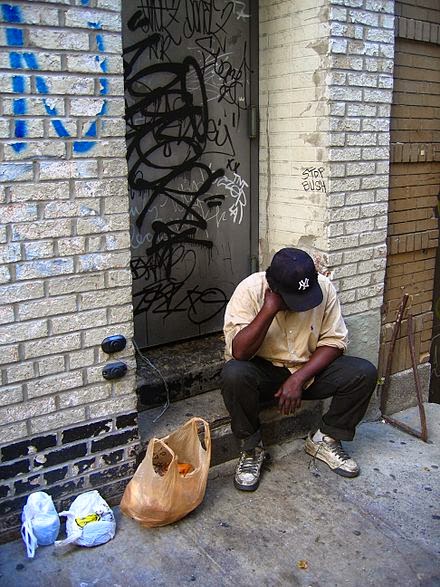


New York City had 48,000 homeless in 2013.  San Francisco has about 10,000 while in Washintgon, D.C. there are about 7,000.  In all, it is estimated that there are over 3 million homeless people in the United States, many of them children.

__________________ 

Some important thanks are due for their support of our American premiere of Domino: Caught in the Crisis (Dominó:  agarrado por la crisis). The release is being officially presented by the City of El Cerrito through its Arts and Culture Commission. Thank you El Cerrito. 


Another sponsor is the City of Richmond, through its Arts and Culture Commission. They are helping with publicity. Thanks to them, as well.

And of course thanks in advance to Rialto Cinemas Cerrito. We certainly couldn't do it without you!

Even more thanks to our fiscal sponsor, From the Heart Productions, and to César's Restaurant in Berkeley, who is the first donor of a prize for the raffle we'll hold at the screening - a $100 gift certificate for food and drink in their restaurant!

Saturday, January 10, 2015

My Peru trip - day 15 (all about he BIG SHOOT)

Peru diary (Dec. 19, 2014)

Well, yesterday was the BIG SHOOT, the reason that I scheduled my trip when I did, so that I could get all three great percussionists together:  Lalo Izquierdo, Juan Medrano Cotito, and Huevito Lobatón.

We filmed the conversation part in "my apartment."  l to r:  Cotito, Huevito Lobatón and Lalo Izquierdo.

And they were, well, great!

We started off by filming a conversation between the three of them, in which I presented three topics and asked them simply to talk about them.  The first topic was...how did they learn Afro-Peruvian rhythms.  Of course, I knew they had all learned as kids in their homes, watching parents, family, and friends but I wanted them to talk about this in front of the camera.

They did, indeed, talk.  After an hour on the topic, I had to raise my hand and ask them to stop since I was running out of film.  (I still shoot with videotape, although the other two camera people had video cards.)

Me with Huevito Lobatón.  We filmed the interviews in a park in Barranco (another district of Lima).

What they said as they talked was really fun and interesting.  I'm sure you'll enjoy it.

Because of the time factor, we had to skip topic two, and I had them move briefly through topic three (what they think is the future of Afro-Peruvian music, rhythms and dance).

Next, we filmed short interviews in which I asked each of them separately a very few questions.

Lalo Izquierdo and Juan Medrano Cotito in the park.

Finally, the big thing:  the performance part.  We filmed this in a cultural organization which has a stage and puts on performances.  It's called Casa Shenan.

They did four numbers:  one with just the three of them playing cajón and singing;  one with Lalo Izquierdo and Huevito Lobatón performing zapateo footwork (with a guitar accompanying them) and two with a guitar, a singer, and the three of them playing percussion - cajón and some quijada de burro.

In Casa Shenan, setting up for the performance part.

It was really great.  In fact, I've decided I'll use this material (supplemented by other things I shot in Peru) to make a documentary called Masters of Percussion...because they really are, and all three are fascinating people.

_____________________
(For more photos, go to the Facebook page of Palomino Productions, A Zest for Life Afro-Peruvian, and Eve A. Ma.)

I am in Peru for reasons related to our documentary, A Zest for Life, and other work about Afro-Peruvians.

Monday, December 29, 2014

el Carmen, "hatajo de negritos," and more Peru trip

(diary from day 9 of my trip - Dec. 13, 2014)

Am now in the little town of el Carmen, in the southern coastal area of Peru.  To get here, you take a bus to Chincha and then a taxi from Chincha to el Carmen.  It´s important to take a secure taxi...many of the taxis here are not secure, so you need to get the name of a taxi before you start your trip.

Many of the houses have murals.  This is of a violinist who lead one of the hatajos.

El Carmen is a predominantly Afro-Peruvian town in which they carry on a centuries old tradition called the "hatajo de negritos."  The "hatajos" are groups of dancers - all men except for one which is exclusively women - who perform special dances on the occasion of Christmas, the celebration of the Virgin of Carmen, and 12th Night.

I am staying in a beautiful "hotel" - a big, airy house with 2 acres of grounds planted in avocado trees, fruit, bananas, etc..  The proprietor is Edith Maldonado, a woman instrumental in seeing to the production of the first documentary about the "hatajos." She also co-founded one of the town's cultural organizations.  This was back in 2007.  A newer, excellent, one was filmed in 2012 by the Peruvian Ministry of Culture.

Veranda at back of the house/hotel, with Edith Maldonado.

Since there are already two documentaries about the "hatajos," I filmed only a tiny portion of one of the rehearsals.  It is really wonderful stuff, and a fascinating story.

People here are loath to sign documents, an important consideration for me since I need release forms signed.  And drama, drama!  One of the places I was to film cancelled their rehearsal in part because, after I set up my camera, I explained I´d need a signature.  But I got plenty enough footage in the other place to use for what I´m working on.

Margarita Cordoba (in whose home we filmed) with her nephew, leader of one of the hatajos.  In the background you see an altar to baby Jesus and the Virgin of Carmen.

Another small drama:  I was told the place where I´m staying could accept payment by debit-credit card.  On arriving, I discovered this is not correct.  El Carmen does not have a bank, so later today, I´ll go in a tiny, overcrowded van into Chincha to search for an ATM machine and hope a) it will give me the money I need and b) it won´t eat my card.

Kids getting ready for practice in the house of the Ballumbrisios.

Tomorrow afternoon, I leave el Carmen to go to San Luis de Cañete (which I just discovered is a different place from Cañete...good that I found out because I was planning to go to Cañete) where I´ll hopefully hook up with Lalo Izquierdo, visit his cultural association, and film him giving children a lesson in cajón.

Then, back to Lima.

Friday, December 12, 2014

Lalo Izquierdo - interview and cajón session

Yesterday (Dec 8, 2014) we filmed an interview and cajón demonstration with Lalo Izquierdo in the patio of the apartment where I'm staying in Lima, Peru. "We" means me and a camera operator/all around assistant. He will remain nameless because the quality of his work was kind of mediocre.

On the whole, things went fine and I think I know how to fix a few of the little problems that cropped up with the image. But life is full of little bumps in the road, right?

Lalo Izquierdo (right) and me.  A bit of a contrast, right?
Our first bump came when Lalo couldn't find the apartment. Lima is a big city, and when I say I'm staying in Lima, I really mean I'm staying in greater Lima, in the Lima metropolitan area.

My particular section is called Miraflores, and the apartment is on a short street named la Libertad. I called Lalo on his cell phone 15 minutes after he was due, and found out he was wandering around, looking for the street. I passed the phone over to the camera operator who explained to Lalo how to get here. Twenty minutes later, I got a call from Lalo...he was still wandering around.  Lost.

The upper half of "my" short street, la Libertad.

In the end I had to send the camera operator out to find him and guide him over here.

Next problem: I was short one camera battery. (We were filming with three of my cameras, using two different formats). That was solved when we found an electrical outlet close enough for one of the cameras to use.


Starting to set up.
After overcoming several other little problems, we obtained a fairly decent image and good sound for two separate interviews (one for each format) and two separate cajón demonstrations, plus shots of Lalo and me walking down the street. 

What we missed, which is important, is a second interview to be conducted in Sucro with an elderly woman (wife of a deceased Afro-Peruvian percussionist great, Ronaldo Campos). With the problems of Lalo getting lost and the time it took to film everything in Miraflores, she had gone out.

Lalo on set with the cajón.

We'll catch her another day.

And the problems with the camera operator? He doesn't know how to zoom, and the only idea he has of filming an interview is to point the camera towards the people to be filmed and punch the "record" button. 

SIGH!

____________________

We are working on making a few revisions in our documentary film, A Zest for Life: Afro-Peruvian Rhythms, a Source of Latin Jazz, and shooting a trailer for a new, more comprehensive work about Afro-Peruvian music and the Afro-Peruvian community.

P.S.  Thanks to María del Carment López Quispe for help with some of my makeup.

Saturday, November 29, 2014

Finding Jenny Vincent

To make some improvements on my documentary about Spanish immigrants,"Weaving with Spanish Threads," I decided to add some music. One piece I wanted was a traditional Spanish song that the immigrants would have listened to and played after they moved to California. I found just what I wanted on a music album arranged and produced by Jenny Vincent and performed by her trio, music she found in a collection created back in the 1930s.

In tracking down the rights, I found Jenny Vincent herself. Jenny Vincent is an activist and musician, and in bygone days, played with the likes of Pete Seeger and Woody Guthrie.  She is now 101, lives in New Mexico, and still jams with her musician friends every week.  They come to the nursing home where she lives.  
On the CD with the music I wanted, she plays the accordion but now, at age 101, that instrument is too heavy for her so she plays the piano.  

Jenny Vincent came from a privileged background.  As a young woman, she played classical piano. but after she became an adult, she found her passion in the workers' rights movement, and turned to playing folk songs on the accordion.  She spent her life as an activist and is still deeply committed to the rights of the powerless.

Craig Smith, a writer and musician, and one of the people who gets together with her each week, has written a biography of her called Sing My Whole Life Long:  Jenny Vincent's Life in Folk Music and Activism.  You might want to look it up.

_________________________
We've used some of Jenny Vincent's music in our documentary, Weaving with Spanish Threads:  an Immigrant's Tale, and in the trailer (HERE) for that documentary.  Or if you want to listen to one of the jam sessions, go HERE and HERE.

Saturday, November 22, 2014

Mexico´s indigenous civilizations - the Maya: Uxmal, personal recollections (part 2 of 2)

The Maya, like the Aztecs after them, constructed pyramids and ball courts, as well as monumental palaces.  They held the serpent as being especially sacred.  They also engaged in human sacrifice,  although not on as large a scale as the Aztecs.

The palace and ballcourt at Uxmal with me on a hill above it.

The Maya had a complete, written language which has only very, very recently been deciphered.  They also produced a lot of chocolate...perhaps something you don't consider important but to many of us, well, chocolate is a really good thing!

Around the same time that the Maya flourished, on their southwestern borders, contact with the smaller civilizations of Olmec, Mixtec and Zapotec influenced Mayan culture.

I was lucky enough to visit the city of Uxmal when I was around 11 years old.  My mother and uncle took me on a trip to Mexico (financed by my generous grandfather).  My mother, who loved traveling, decided we should go to Yucatán.

The pyramid at Uxmal.

My mother didn´t like going to the places that "everyone" went, so instead of going to the much better know Chichen Itza, we visited Uxmal.  At that time, my father was teaching at Tulane University, and Tulane has been very prominent in the archaeological work related to the Maya.  I´m not sure if that is why we were able to go there, but at any rate, I got to climb the pyramid.  I also learned, when at the top, that an archaeologist had died the week before right about where I was standing.  He feel from the top of the temple.

I climbed down more slowly than I climbed up.  I climbed down very, very carefully.

We also got to see a cenote, one of those mysterious bodies of water than come up from underground, and where sacrifices of young maidens are supposed to have taken place.

We even got to swim in the cenote.

__________________________
Eve A. Ma and Palomino Productions are currently working on a documentary about Mexican immigrants and Chicanos which deals briefly with the Zapotec, Mixtec, Aztec and other of Mexico´s indigenous civilizations.  Find out about this by signing up for our newsletter LINK.